Jan 2024 - Present
ML Research Assistant (Graduate Assistant)
Ontario Tech University
Software Developer
I’m a Senior Software Developer & Researcher who treats code like a composition. Whether I’m fine-tuning LLMs for security, building data pipelines, or writing lyrics, I build things that are robust, precise, and expressive.

I’m Moe, a developer living at the intersection of logic and art. While my professional background is rooted in the complexities of Machine Learning security and Big Data engineering, my approach is defined by a singular obsession: creating things. I believe the best engineering requires a creative soul, which is why I tackle technical challenges—like hardening AI models or optimizing data workflows—with the same discipline and rhythm I bring to songwriting and the arts. For me, whether it’s a line of Python or a verse of a song, it’s all about finding the perfect balance of form and function.

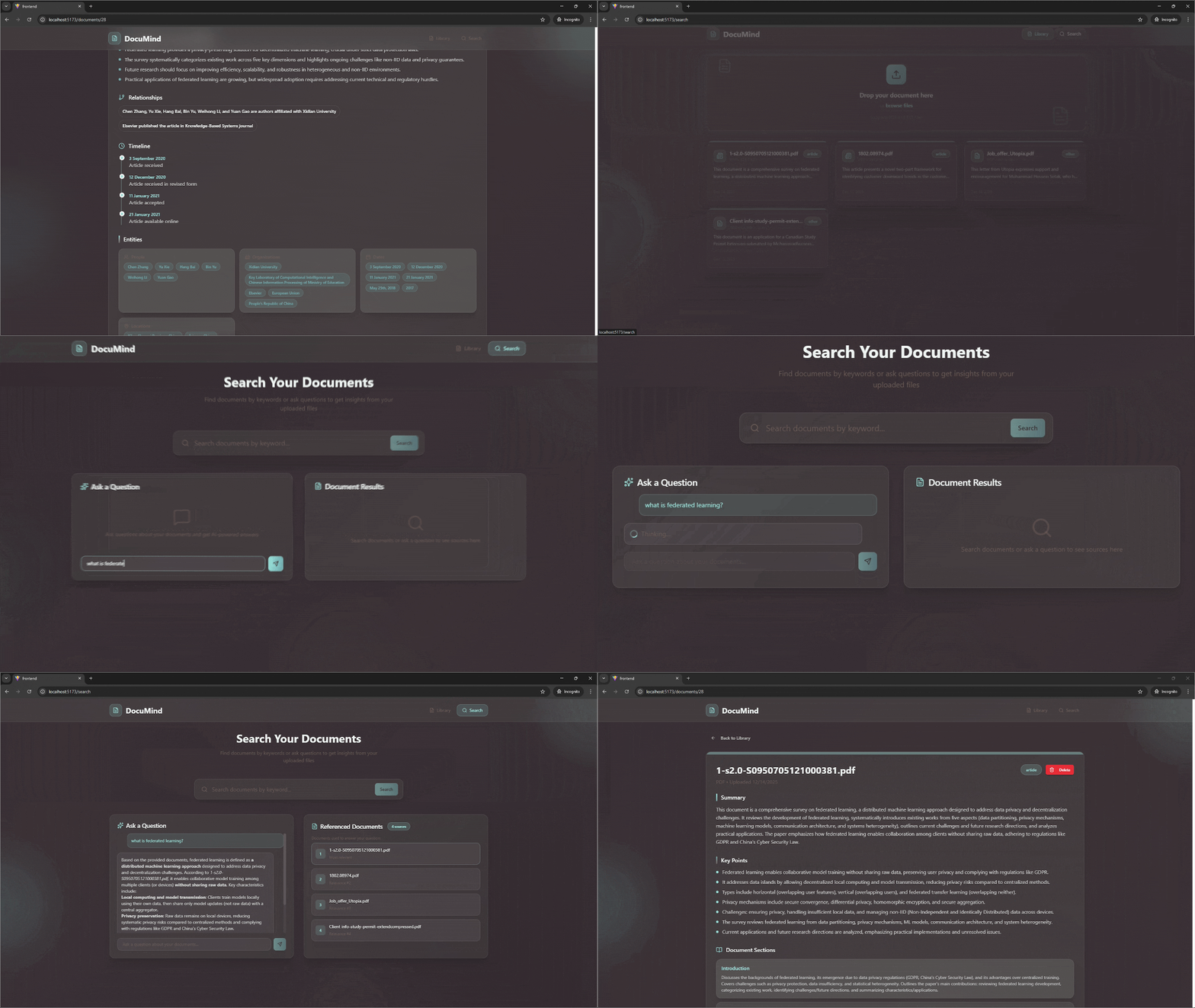
Ever wished you had a second brain that actually remembers everything you've read? I built DocuMind because I was tired of uploading the same PDFs to ChatGPT over and over. I wanted a personal library where my documents live permanently - analyzed, organized, and ready to answer my questions anytime. Upload a PDF or text file, and DocuMind's AI breaks it down into summaries, key points, sections, and even pre-generates questions it can answer. The magic happens when you ask questions across your entire library - using RAG (Retrieval Augmented Generation), it searches all your documents, finds the relevant pieces, and synthesizes answers from multiple sources. It's like having a research assistant who's read everything you have and never forgets. Built with a Rails API backend handling document processing and PostgreSQL full-text search, plus a polished React frontend with smooth animations and a dark glassmorphism UI that makes organizing knowledge actually enjoyable.
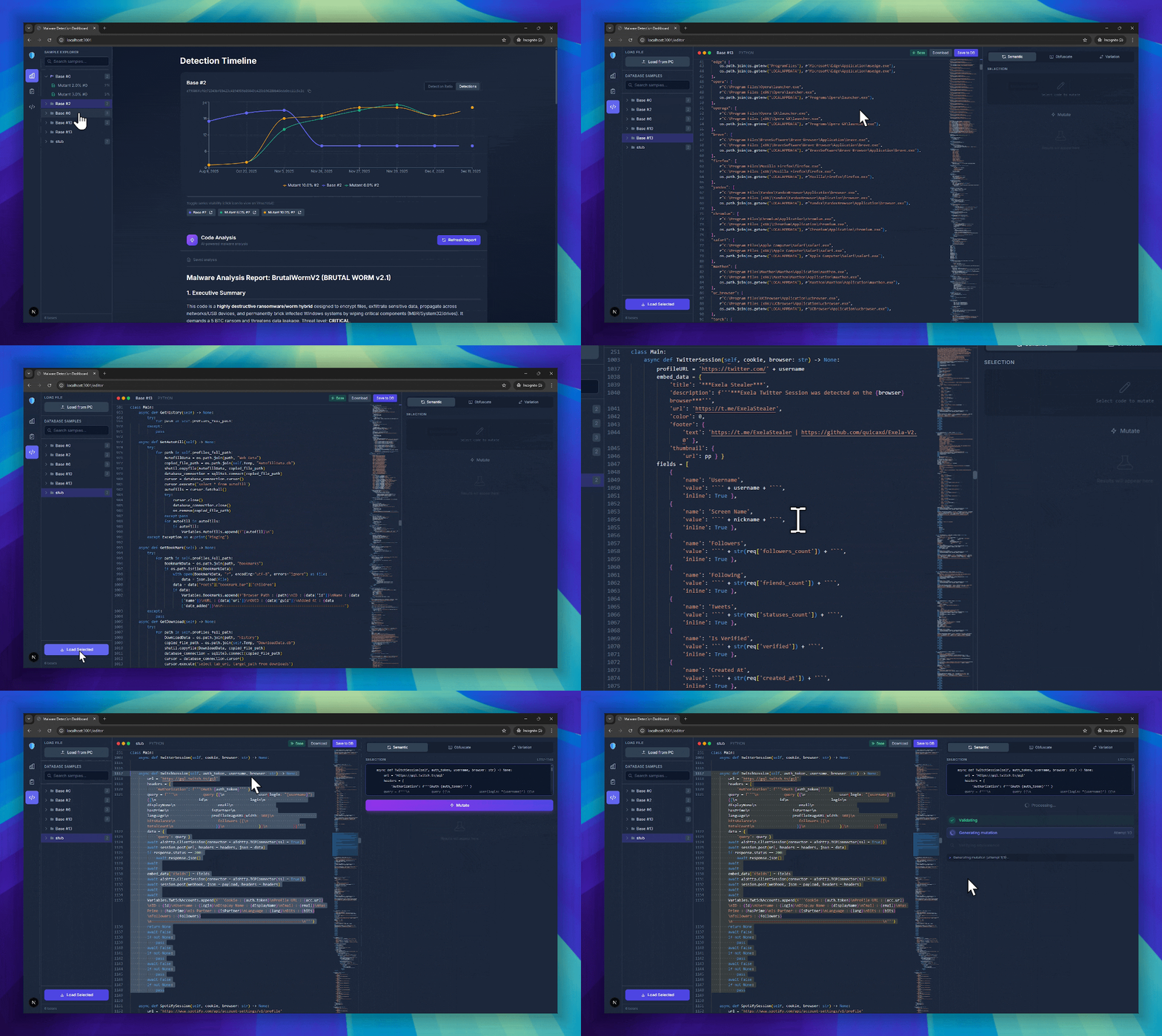
This is part of my Master's thesis in Computer Science, exploring code mutation using LLMs. Code mutation is the process of rewriting code snippets into functionally equivalent variations - same behavior, different syntax. My research focuses on an offensive application: can we use LLMs to rewrite known malware and evade detection? And more importantly, how do we defend against this? I built a dataset for code mutation research, fine-tuned multiple code LLMs, and created this dashboard as the experimental playground. Upload malware samples, and the LLM-powered mutator rewrites them with three strategies: semantic (preserve meaning, change structure), obfuscation (add complexity), or variation (alternative implementations). The real magic? It tracks everything. Each base malware and its mutants get analyzed by 70+ commercial antivirus engines via VirusTotal, so you can watch detection rates change in real-time as mutations evolve. There's also an AI analyzer that breaks down what each malware actually does - because understanding the threat is half the battle. Built with a Django REST backend handling the heavy lifting, SSE streaming for real-time mutation progress, and a sleek Next.js frontend with a dark theme that makes security research feel like you're in a cyberpunk movie.
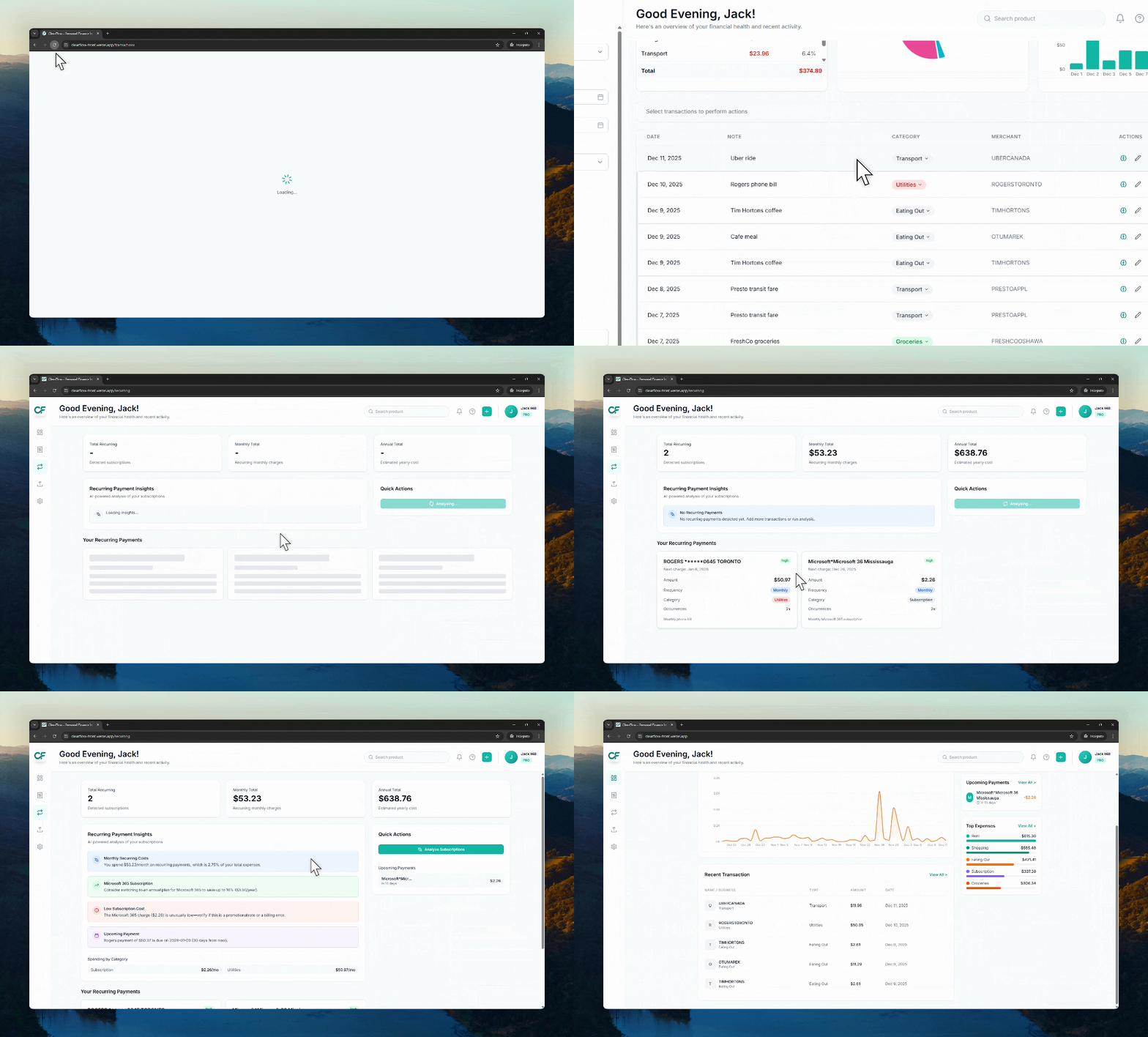
Managing personal finances and making the right decisions has always been a challenge for me. While there are plenty of tracking apps out there, most require a paid subscription. I decided to build ClearFlow to solve this for myself—a free, private tool powered by AI. Since financial data is sensitive, I prioritized security to ensure data privacy while interacting with AI services. You can simply upload your bank exports, and the platform analyzes, categorizes, and adds notes to your transactions. It even suggests ways to save money based on your recurring payments. It’s a secure, intelligent way to understand where your money goes without the monthly fees.
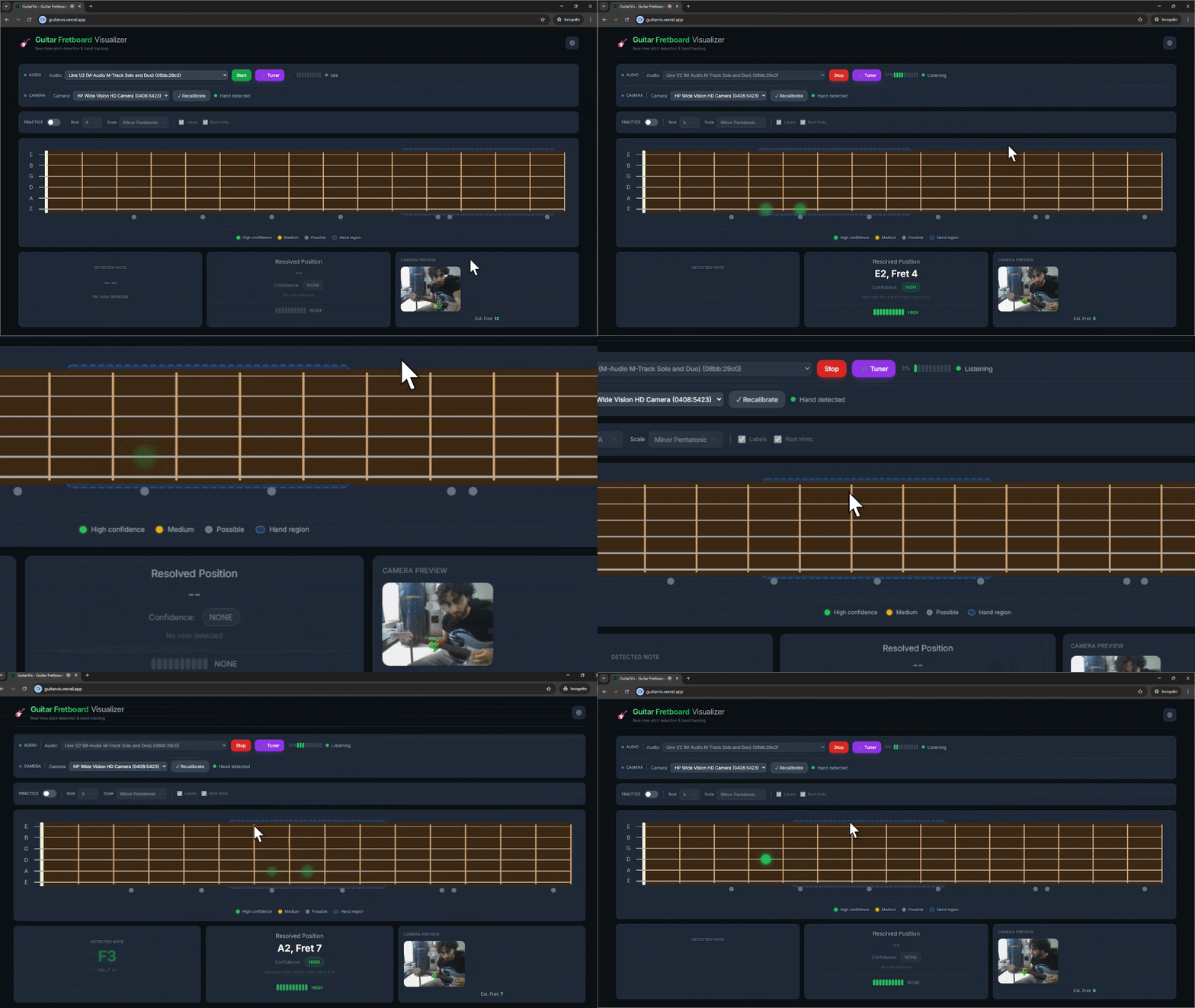
Built this one for myself. I play guitar casually and always struggled with memorizing scales and where notes live on the fretboard - my brain just doesn't work that way. So I built GuitarVis: a real-time fretboard visualizer that shows exactly where I'm playing. It combines Web Audio API pitch detection using autocorrelation algorithms with MediaPipe hand landmark tracking to pinpoint the exact fret position on the neck. The tricky part was resolving the same note across multiple fret positions - solved it by fusing audio frequency data with hand position coordinates through a confidence-weighted algorithm. Features a calibration wizard that maps the user's camera view to normalized fretboard coordinates, scale practice mode supporting Major, Minor Pentatonic, Blues, and Dorian scales with root highlighting, and a built-in chromatic tuner with real-time cent deviation display. As a visual learner, seeing the scale shapes light up as I play through them finally made everything click. The whole thing runs at 60fps with smooth Framer Motion animations because laggy feedback kills the learning flow.
Jan 2024 - Present
Ontario Tech University
2022 - Present
Ontario Tech University
2023 - Aug 2024
Utopia
Jan 2021 - Aug 2022
BehsaCorp
Summer 2020
Trading World
Summer 2019
Research Institute for ICT

2024-Present
Master's in Computer Science
Ontario Tech University, Canada
2018 - 2022
Bachelor's in Computer Engineering
Amirkabir University of Technology, Iran